City services discussion
August 2026 Update:
At its Aug. 24 meeting, City Council approved placing the following question on the Nov. 3 ballot for Lakewood voters to decide:
City of Lakewood Ballot Issue 2G
SHALL CITY OF LAKEWOOD TAXES BE INCREASED BY UP TO $17,600,000 IN THE FIRST FULL FISCAL YEAR (COMMENCING JANUARY 1, 2027) AND BY WHATEVER ADDITIONAL AMOUNTS AS ARE RAISED ANNUALLY IN EACH SUBSEQUENT YEAR, THROUGH THE IMPOSITION OF AN ADDITIONAL SALES AND USE TAX OF 0.5% (INCREASING CITY’S SALES AND USE TAX RATE FROM THREE PERCENT (3%) TO THREE AND A HALF PERCENT (3.5%)), PROVIDED THAT:
- FOOD, AS DEFINED IN LAKEWOOD MUNICIPAL CODE SECTION 3.01.430 (WHICH INCLUDES GROCERIES), SHALL BE EXEMPT FROM SUCH ADDITIONAL HALF-PERCENT SALES AND USE TAX,
AND SHALL THE TAX REVENUES FROM SUCH ADDITIONAL HALF PERCENT SALES TAX BE USED ONLY FOR THE FOLLOWING SPECIFIC PURPOSES:
- PUBLIC SAFETY PURPOSES, INCLUDING INVESTING IN CRIME PREVENTION AND HOMELESSNESS RESPONSE; AND
- TRAFFIC SAFETY IMPROVEMENTS, INCLUDING MAINTENANCE AND CONSTRUCTION OF STREETS AND SIDEWALKS, ROAD IMPROVEMENTS TO REDUCE VEHICLE SPEEDS, AND PEDESTRIAN AND BICYCLE SAFETY ENHANCEMENTS.
AND SHALL SUCH ADDITIONAL HALF PERCENT SALES AND USE TAX BE COLLECTED, RETAINED AND SPENT AS A VOTER APPROVED REVENUE CHANGE NOTWITHSTANDING ANY REVENUE OR EXPENDITURE LIMIT CONTAINED WITHIN ARTICLE X, SECTION 20, OF THE COLORADO CONSTITUTION OR ANY OTHER LAW?
YES ________
NO ________
¿DEBERÁN AUMENTARSE LOS IMPUESTOS DE LA CIUDAD DE LAKEWOOD HASTA EN $17,600,000 EN EL PRIMER AÑO FISCAL COMPLETO (A PARTIR DEL 1 DE ENERO DE 2027) Y EN CUALESQUIERA CANTIDADES ADICIONALES QUE SE RECAUDEN ANUALMENTE EN CADA AÑO SUBSIGUIENTE, MEDIANTE LA IMPOSICIÓN DE UN IMPUESTO ADICIONAL SOBRE LAS VENTAS Y EL USO DEL 0.5% (AUMENTANDO LA TASA DEL IMPUESTO SOBRE LAS VENTAS Y EL USO DE LA CIUDAD DEL TRES POR CIENTO (3%) AL TRES Y MEDIO POR CIENTO (3.5%)), SIEMPRE QUE:
- LOS ALIMENTOS, SEGÚN SE DEFINEN EN LA SECCIÓN 3.01.430 DEL CÓDIGO MUNICIPAL DE LAKEWOOD (QUE INCLUYE LOS COMESTIBLES), ESTÉN EXENTOS DE DICHO IMPUESTO ADICIONAL DEL MEDIO POR CIENTO SOBRE LAS VENTAS Y EL USO,
Y DEBERÁN UTILIZARSE LOS INGRESOS FISCALES PROVENIENTES DE DICHO IMPUESTO ADICIONAL DEL MEDIO POR CIENTO SOBRE LAS VENTAS ÚNICAMENTE PARA LOS SIGUIENTES FINES ESPECÍFICOS:
- FINES DE SEGURIDAD PÚBLICA, INCLUIDA LA INVERSIÓN EN LA PREVENCIÓN DEL DELITO Y LA RESPUESTA A LA FALTA DE VIVIENDA; Y
- MEJORAS EN LA SEGURIDAD VIAL, INCLUIDOS EL MANTENIMIENTO Y LA CONSTRUCCIÓN DE CALLES Y ACERAS, MEJORAS VIALES PARA REDUCIR LA VELOCIDAD DE LOS VEHÍCULOS, Y MEJORAS EN LA SEGURIDAD DE PEATONES Y CICLISTAS.
Y DEBERÁ RECAUDARSE, RETENERSE Y GASTARSE DICHO IMPUESTO ADICIONAL DEL MEDIO POR CIENTO SOBRE LAS VENTAS Y EL USO COMO UN CAMBIO EN LOS INGRESOS APROBADO POR LOS VOTANTES, SIN PERJUICIO DE CUALQUIER LÍMITE DE INGRESOS O GASTOS CONTENIDO EN EL ARTÍCULO X, SECCIÓN 20, DE LA CONSTITUCIÓN DE COLORADO O EN CUALQUIER OTRA LEY?
SÍ ________
NO _______
Learn more about what this involves:
- Watch the Mayor's Minute video.
- Read the article about the city services discussion in Looking@Lakewood, the city's printed newsletter mailed to all addresses in the city.
- Scroll through the carousel of information slides about what the half-penny means.
- Visit the answers to frequently asked questions.
- Ask a question.
July 2026 Update:
At the July 20 Study Session, City Council received a presentation on the results from the city services survey and discussed the next steps. Council reached a consensus to continue this project. As a result, the Budget and Audit Board is working on a question for the November ballot to ask Lakewood voters for a ½ cent sales tax increase for the city’s 3 percent sales tax. The board is determining what services this sales tax would fund, and the board will present a proposed ballot question for City Council’s review in August. Here are ways to participate and stay updated on this work:
- Watch the video of the July 20 study session and the July 29 Budget and Audit Board Meeting.
- Flip through the survey presentation.
- Review the survey results report.
- Check out the answers to frequently asked questions.
- Review the board's presentation on city finances.
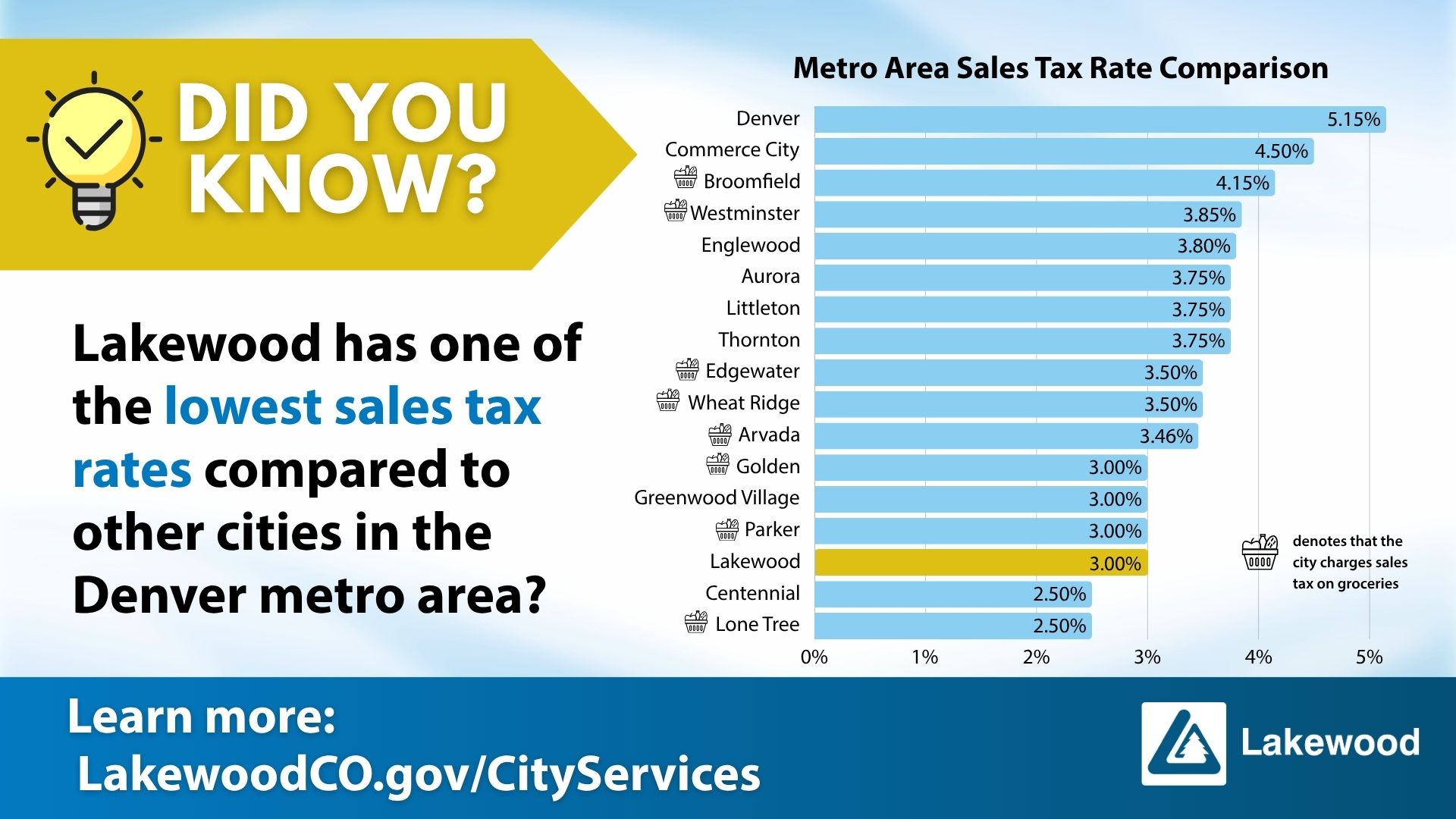
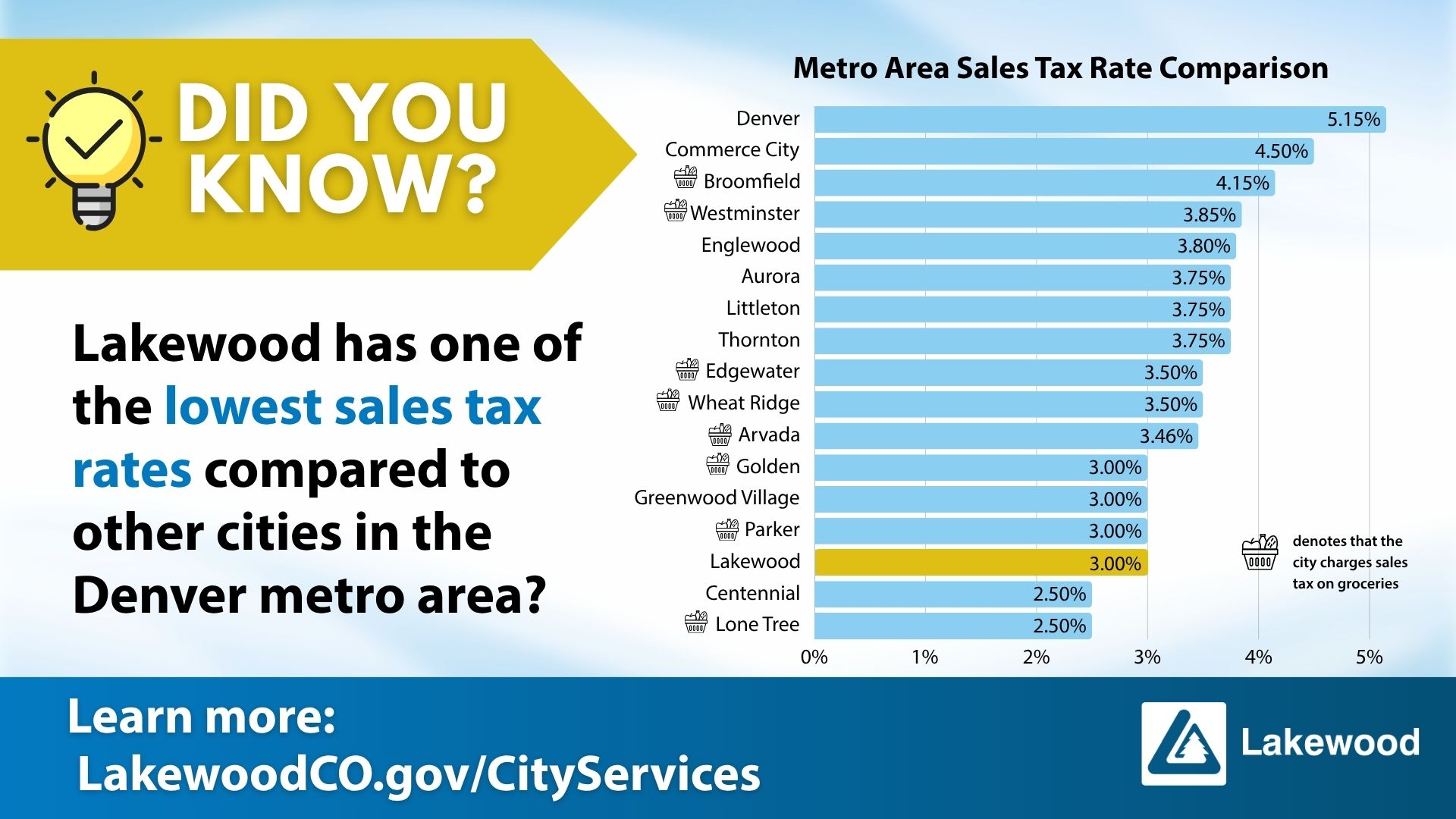
- See what the city's sales tax rate and how it compares to other metro cities.
- Ask a question.
June 2026 Update:
Thank you to all who participated in the survey. The survey is complete. Staff are awaiting results and will share them with City Council in the near future. A presentation is scheduled for the July 20, 2026, Study Session. Information for this meeting will be posted here when it becomes available on LakewoodSpeaks.org.
-
Frequently asked questions
Share Frequently asked questions on Facebook Share Frequently asked questions on X (formerly Twitter) Share Frequently asked questions on Linkedin Email Frequently asked questions linkCheck out some of the answers to frequently asked questions.
What work has the Budget and Audit Board being doing on the topic of city services?
The city's Budget and Audit Board wants you, Lakewood residents, to provide your thoughts on the best ways to continue to support the important city services you receive. To get your input on this, the board commissioned a survey that was sent by text messages May 7-21 to Lakewood residents. The survey results are based on 1,091 residents taking the survey.
The board also received a presentation about the city's finances in March.
Why conduct a survey?
This is one of the best ways to gather in-depth information from residents, and it relies on a vendor with expertise in these kinds of surveys.
Similar to other city surveys, it includes a survey of randomly selected residents, which is the method used to ensure that survey results are statistically valid. Statistically valid results mean that they are accurate and reliable and are not based on chance or a flaw. It also allows robust conclusions to be drawn from the results.
There also was a link to the survey open for any resident to take (see below). The results from the statistically valid and open survey will be gathered separately.
English: Open city services survey (Note: Survey closed)
Spanish: Open city services survey (Note: Survey closed)
Why ask about city services?
One of Lakewood's biggest challenges is an issue that cities across Colorado face. The primary way of paying for the services important to residents is sales taxes paid by shoppers. The money from shoppers in recent years has not kept up with increasing costs such as gas for police cars, asphalt to pave city streets, insurance to protect the city’s recreation centers, or salaries to pay staff to provide city services every single day.
The sales tax collected from shoppers is flat and is projected to remain flat in the coming years. Shoppers are shopping less, but just like you’re finding with your budget at home, costs for city services are going up.
This challenge isn’t about government growth. This is about how we, as a community, pay for the services that you need and expect. The survey is designed to get your thoughts on the best ways to ensure sufficient funding to pay for city services.
What will the city do with the survey results?
It will help guide the Budget and Audit Board, which consists of three residents and three City Council members. The board serves as a financial oversight committee, reviews financial statements and budget forecasts, and provides feedback on budgetary issues.
What is the sales tax rate in the City of Lakewood?
The sales and use tax in Lakewood is 3 percent. Here's how it compares to other cities in the metro area.